Your Rent Doubled. Your Salary Did Not.
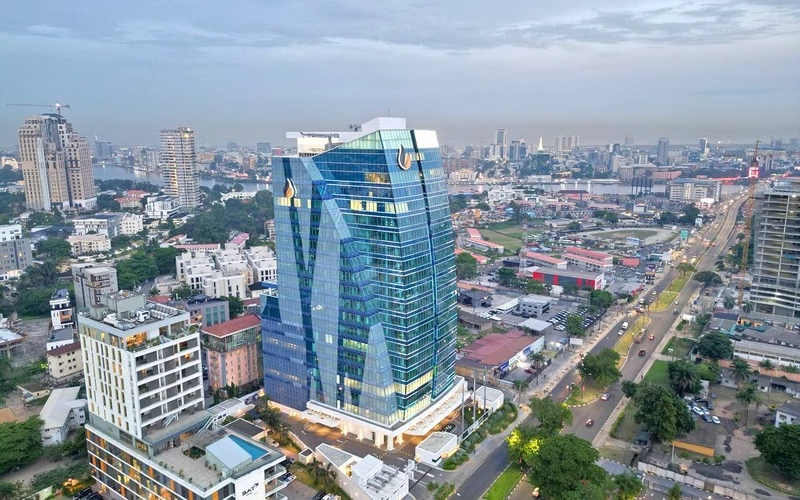
Here is what Lagos rent really costs in 2026, why it happened, what the law says, and what to do before you renew.
In 2022, the average two bedroom flat in Lekki Phase 1 rented for ₦4 million a year. In 2026, that average is ₦10 million.
Read that again. Slowly.
Did anyone you know get a 150% raise in that time? Most people you know probably got nothing, or got a “we are managing” speech from their MD and a pat on the back. Meanwhile the landlord sent one WhatsApp message and the rent went up massively.
And Lekki is not even the worst of it. In Ikate, the area people moved to when Lekki got more expensive, the average two bedroom went from ₦3 million to ₦8.5 million. That is up 183% in four years.
So let us do this properly. No panic, no blame game. Just the numbers, the reasons, the law, and a plan.
The numbers: two bedrooms, four areas, 2022 vs 2026
These are average annual rents for a two bedroom apartment, from the Lagos Island Residential Market Report 2026 by Lagos Realty. You can read Nairametrics’ full breakdown of the report here.
| Area | 2022 | 2026 | Change |
|---|---|---|---|
| Ikoyi | ₦8m | ₦17.25m | +116% |
| Victoria Island | ₦6.57m | ₦15m | +128% |
| Lekki Phase 1 | ₦4m | ₦10m | +150% |
| Ikate | ₦3m | ₦8.5m | +183% |
Every single area more than doubled. And this part should worry you the most. But please, not too much. Ikate, the “cheaper” option, the escape route, recorded the biggest jump of all. When everyone runs to the same exit, the exit gets pricier.
One small but important point before we go on. These are averages across each area. Your actual flat could be above or below them, depending on the building, the size, the finishing, how you negotiate, and whether there is a pool. Treat the table as a benchmark, not a price list.
It is not only two bedrooms
Look at Lekki Phase 1 across every size:
| Lekki Phase 1 | 2022 | 2026 |
|---|---|---|
| One bedroom | ₦2.5m | ₦7.5m |
| Two bedroom | ₦4m | ₦10m |
| Three bedroom | ₦5m | ₦15.5m |
| Four bedroom | ₦5.5m | ₦21.5m |
A one bedroom tripled. A four bedroom almost quadrupled. If you were planning to “upgrade when the family grows”… the market had other plans.
The same report ranks Lekki Phase 1 as the fastest growing rental market on the Island, with average rent growth of 35.9% a year over its five year review period. Victoria Island came next at 33.5%, then Ikate at 29.6%, then Ikoyi at 22.6%. While Ikoyi is still the most expensive place to rent. Lekki is simply where prices are climbing fastest.
The other half of the story: what happened to your pay
Rent did not rise in a vacuum. It rose while salaries stood still.
In August 2026, GTI Investment Group presented its research at a forum called “Beyond Rent: A Lagos Housing and Capital Forum”. The findings are uncomfortable. Between 2024 and 2026 alone, rents across Lagos rose by 80 to 120%. Over the same two years, wages grew by 7 to 9%. That is two years. Not four.
Sit with that. Your rent can double in two years while your salary moves by less than a tenth.
It gets more personal when you turn it into monthly income. According to GTI’s analysis, a two bedroom flat takes:
- about 29% of your income if you earn ₦1 million a month
- about 58% if you earn ₦500,000 a month
- about 97% if you earn ₦300,000 a month
At ₦300,000 a month, rent is not a bill anymore. It is your whole salary with a little change left for transport. Maybe.
The same research found some Lagos residents now spend 60 to 70% of their income on rent, and 80.6% of the people GTI surveyed described housing in Lagos as severely unaffordable. The usual guideline is that rent should take around 30% of what you earn. Lagos left that guideline behind a long time ago.
Then there is the price to income ratio, which compares what a home costs with what people earn. Anything above 5 is considered severely unaffordable. GTI puts Lagos at 19.2. That is higher than Cairo at 18.4 and Nairobi at 11.5.
We are not just expensive. We are expensive by African standards, in a country where most salaries are paid in naira.
Why it happened
I will be honest with you. There is no single villain here, and anybody who gives you one villain is selling you something. Four things happened at the same time.
Propertydome links to homes listed on other sites. Always inspect a home and have a lawyer check its title before you pay anything.
1. There are simply not enough homes
Lagos has a housing deficit of about 3.4 million units, up from 2.95 million in 2016, according to Professor Timothy Nubi of the University of Lagos Centre for Housing and Sustainable Development. He estimates the state needs about 227,576 new homes every year just to keep up with demand. It delivers far fewer.
And most people are renting. A report by Fortren & Company found 51% of Lagos residents live in rented homes, while only 31% live in a house they personally own.
Too many people. Too few homes. You already know how that story ends.
2. Building got painfully expensive for many
The naira lost value, and that pushed up the cost of everything that goes into a building. Fortren & Company found construction costs rose about 20% between December 2025 and May 2026 alone, driven by higher material and energy prices and higher freight costs. Cement that sold for ₦5,000 to ₦6,000 a bag at the end of 2023 now goes for about ₦12,500 to ₦15,000.
Developers do not absorb those costs out of kindness. They pass them on, or they slow down, or they build fewer or smaller units. Either way, you pay.
3. Demand never slowed down
Lekki Phase 1 has the most active rental market on the Island, with the broadest base of renters and the highest number of deals. Young professionals, families and returning diaspora all want the same few streets. When demand stays high and supply stays short, prices do exactly what you expect.
4. The fees sitting on top
Everything above is rent only. Then come the agency fee, the legal fee and the caution fee. The unwritten Lagos rule has long been 10% for agency and another 10% for legal, on top of the rent.
So a ₦10 million flat is never a ₦10 million move. Budget for more, or the fees will ambush you on the day you sign.
What the law actually says, and where it stops
This is the part most tenants do not know, and it is the part that can save you money.
Your right under the current law
Section 37 of the Lagos State Tenancy Law 2011 gives a sitting tenant the right to go to court and ask it to declare a rent increase unreasonable. In plain language: if your landlord doubles your rent, you can ask a court whether that increase is fair. The court looks at things like the rent on similar properties in your area. If you want to understand the rest of your rights, LawPadi has a clear plain English guide to the Lagos Tenancy Law.
That right exists today.
The catch, and it is a big one
The 2011 law does not cover Apapa, Ikeja GRA, Ikoyi or Victoria Island. Those four areas are written out of it by name.
So if your flat is in Ikoyi or Victoria Island, two of the most expensive rental markets in this whole story, Section 37 does not reach you. The places where rent is highest are the places where this protection is missing.
The new bill moved yesterday
On 23 November 2026, the Lagos State House of Assembly adopted the report of its Committee on Housing on the new Lagos State Tenancy Bill. That is a real step forward. The bill passed its second reading back in July 2025 and has been sitting with the committee since then.
But be careful with the headlines you see this week. A report adopted by the House is not a law. Until the bill is passed and the Governor signs it, the 2011 law is still the law that governs your tenancy. Check the latest position before you rely on any of the new rules.
What the bill would change, if it becomes law
Based on the drafts reported so far, the bill would:
- cover every part of Lagos, including Ikoyi, Victoria Island, Apapa and Ikeja GRA
- cap advance rent at three months for monthly tenants and one year for yearly tenants
- cap agency fees at 5% of one year’s rent, down from the usual 10%
- require estate agents to register with the Lagos State Real Estate Regulatory Authority (LASRERA)
The final version could differ from the drafts. Read the law itself once it is signed.
This is general information, not legal advice. If you are in a dispute with a landlord, speak to a property lawyer before you act.
What to do before you renew
Here is the practical part. Six things, in order.
1. Get every increase in writing. A voice note saying “from next year it is ₦15 million” is not a basis for anything, for you or for a court. Ask for it in writing and keep every receipt you have ever been given.
2. Check the number against the market, not against your fear. Use the tables above. If your landlord’s new figure is far above the average for your area and your flat size, say so, with the number in your hand. Landlords negotiate differently with a tenant who has done their homework.
3. Know whether the law covers you. If your flat is outside Apapa, Ikeja GRA, Ikoyi and Victoria Island, Section 37 gives you a route to challenge an unreasonable increase. If you are inside those four areas, that route is not open to you yet. That is exactly why the new bill matters, and why it is worth watching closely over the next few weeks.
4. Ask about paying monthly. The Lagos State Government says it is committed to monthly, quarterly and yearly rent payments, with no more than one year paid in advance. Many landlords still insist on a full year, so treat this as a conversation, not a guarantee. Monthly payment will not make rent cheaper. But it turns one ₦10 million wall into twelve smaller steps. We covered the legitimate ways to pay rent monthly in Lagos here.
Also Read: Monthly Rent in Lagos: 4 Legit Ways to Pay Monthly
5. Look honestly at where the money goes. GTI’s field survey puts the average two bedroom in Lekki Phase 1 at about ₦15 million a year, and in Yaba, Surulere and Ikeja at about ₦4.75 to ₦5 million. Same survey, same method. That is roughly three years on the Mainland for one year in Lekki. It is a different life, a different commute and a different neighbourhood, and nobody should pretend that is a small trade. But it is a real choice, and plenty of Lagosians are already making it quietly.
6. Never pay cash, and never pay into an account you cannot trace. Pay agents and landlords by bank transfer only, and keep the receipt. If anyone pressures you to pay fast, in cash, before you have even seen the flat, that pressure is your warning sign. Walk away.
The bottom line
Four years ago, the average two bedroom in Lekki Phase 1 cost ₦4 million a year. Today it is ₦10 million. In Ikate it nearly tripled. And in just the last two years, while Lagos rents rose 80 to 120%, wages grew 7 to 9%.
That gap, between what homes cost and what people earn, is now the defining fact of life in Lagos. It decides what families eat, which school the children attend, and whether workers can afford to live anywhere near their jobs.
You cannot fix the housing market on your own. But you can walk into your renewal knowing the numbers, knowing your rights and knowing your options. That alone puts you ahead of most tenants in this city.
The numbers will keep moving. Check them again before you sign anything.
General information, not legal advice. If you are in a dispute with a landlord, or before you sign a new tenancy, speak to a property lawyer.